
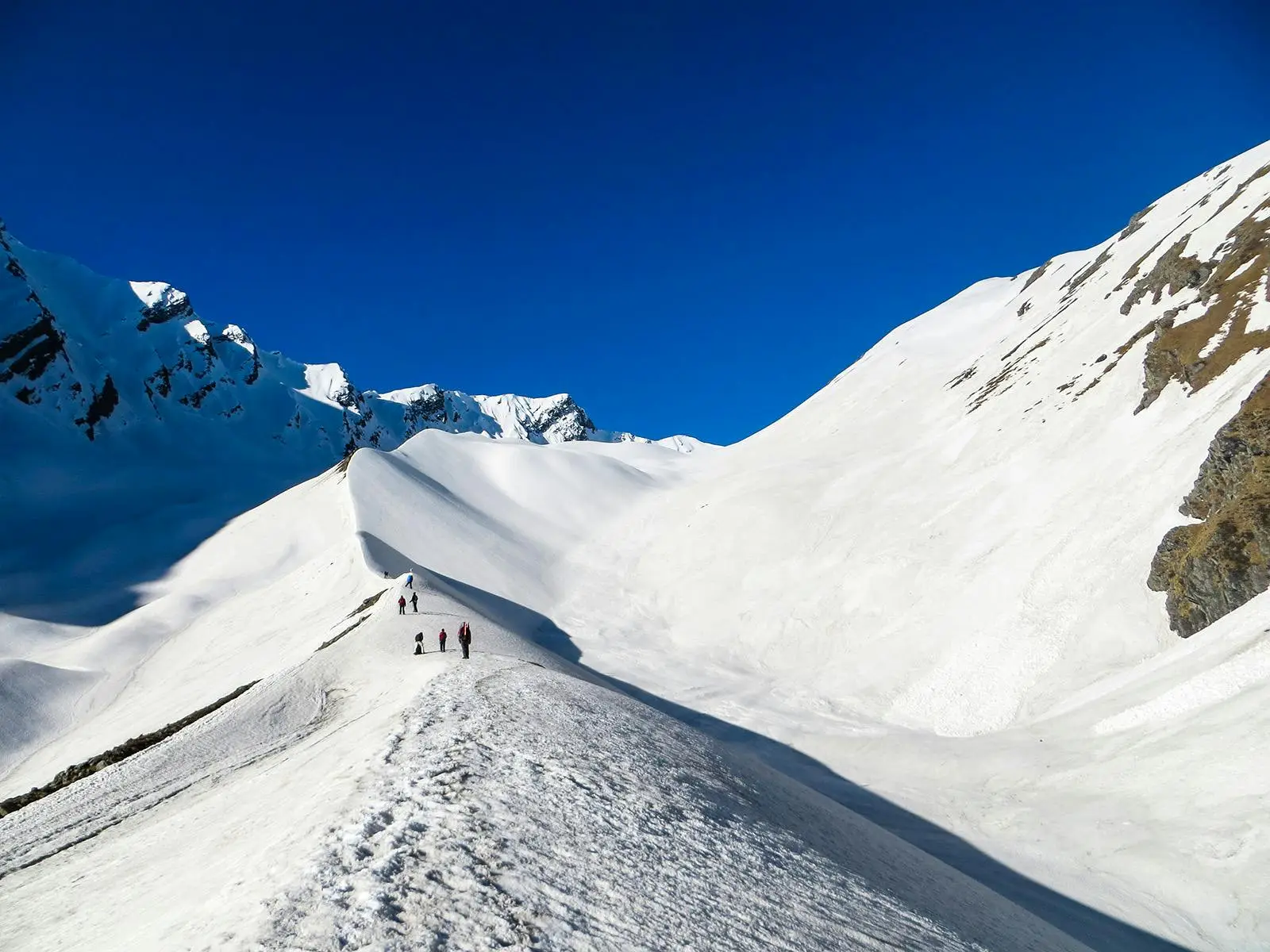
Why Bali Pass Trek is on every trekker's list
The Bali Pass trek is a high-altitude glacier crossing in Uttarkashi, Uttarakhand, connecting Har Ki Dun valley to Yamunotri at 4,850 m (15,912 ft) over 9 days from Sankri.
Nestled deep in Uttarkashi district of Uttarakhand, the Bali Pass trek is a true expedition in every sense of the word. Reaching a maximum altitude of approximately 4,850 metres (15,912 ft), this high-altitude crossing connects the beloved Har Ki Dun valley to the pilgrim-frequented Yamunotri side of the Garhwal Himalayas — a link that few trekkers ever walk. Starting from the well-known basecamp village of Sankri, the trail delivers glacier travel, raw Himalayan wilderness, and cultural encounters that simply cannot be found on busier routes. If you are looking for a trek that rewards preparation and grit with genuine solitude and spectacular mountain scenery, Bali Pass belongs at the top of your list.
In a region saturated with outstanding trekking options, Bali Pass carves out a uniquely compelling identity. Here is what sets it apart:
A rare valley-to-valley crossing. Very few trails in India allow you to enter a trek from one major valley and emerge into an entirely different one. Bali Pass does exactly that — you begin in the lush, forested Har Ki Dun valley and cross into the Yamunotri drainage on the other side, creating a powerful sense of journey rather than an out-and-back slog.
Iconic Himalayan panoramas. The pass rewards climbers with close-up views of Swargarohini Peak (6,252 m) and the magnificent Bandarpunch massif (6,316 m), two of the most visually striking summits in the Garhwal range. On clear days the entire Himalayan horizon feels within touching distance.
Genuine remoteness and low footfall. Unlike the Kedarkantha or Chopta-Tungnath circuits, Bali Pass sees a fraction of the traffic. You are likely to share the trail with more Himalayan birds than fellow trekkers, particularly in the post-monsoon window.
The Govind Wildlife Sanctuary setting. The trail passes almost entirely through the Govind Pashu Vihar National Park and Wildlife Sanctuary, a protected landscape that harbours snow leopards, Himalayan black bears, musk deer, and an extraordinary array of high-altitude flora. The sanctuary status keeps the environment pristine.
Cultural richness. The trail passes through Osla village, one of the most photogenic and culturally intact villages in the Tons valley, where traditional Jaunsari architecture and century-old temples offer a vivid glimpse into mountain life.
For trekkers who have already explored the popular Har Ki Dun trail and want to push further, Bali Pass is the natural — and dramatically more demanding — extension.
At a glance
Ask TrekSage about Bali Pass Trek
Get instant answers grounded in verified trek data — beginner-friendliness, best months, permits, packing, and more.
The route at a glance
The Bali Pass trek covers a total distance of approximately 55–60 km one way, depending on the precise exit point chosen on the Yamunotri side. The trail moves through four distinct terrain zones: forested valley floor, open alpine meadow, high-altitude moraine, and glaciated pass section.
The full route:
Sankri (1,920 m) → Taluka (1,900 m) → Osla (2,560 m) → Har Ki Dun (3,510 m) → Kalkatiyadhar (3,680 m) → Bali Pass Base Camp (~4,200 m) → Bali Pass Top (4,850 m) → Seema / Dhamni (~3,200 m) → Janki Chatti (Yamunotri side, ~2,650 m)
Key landmarks and features:
- Taluka serves as the road-head and has a forest check post where permits are verified. A road connects Sankri to Taluka (roughly 12 km), and most trekkers take a shared jeep or walk this stretch.
- Osla village is a cultural highlight — the ancient Duryodhana temple here is worth a short exploration. The village represents the last significant human settlement before the high Himalayan wilderness takes over.
- Har Ki Dun meadow is a hanging valley at 3,510 m, famously described as the 'Valley of Gods'. This is where the Bali Pass trail diverges from the standard Har Ki Dun day-trek route.
- Kalkatiyadhar is a high campsite on open ground with dramatic mountain views, serving as a staging point for the push toward base camp.
- Bali Pass Base Camp (~4,200 m) sits on moraine below the glacier. Camping here is exposed — wind protection is essential.
- The glacier section begins just above base camp. This section, spanning approximately 2–3 km, requires crampons or microspikes and ideally a rope. The gradient steepens sharply in the final 200 metres before the pass.
- Bali Pass Top (4,850 m) offers 360-degree views including Swargarohini, Bandarpunch, and the Yamunotri peaks.
- Descent to Seema / Dhamni on the Yamunotri side is steep and involves loose scree before the trail stabilises.
The entire route lies within the Govind Wildlife Sanctuary, administered by the Uttarakhand forest department.
Understand more about trekking safely in the sanctuary here.
What each day actually looks like
The itinerary below is structured as a 9-day plan including travel from Dehradun. Adjust rest days based on fitness and acclimatisation needs.
| Day | Route | Night Stay | Altitude | Approx. Distance |
|---|---|---|---|---|
| 1 | Dehradun → Sankri (road transfer ~200 km) | Sankri guesthouse | 1,920 m | — |
| 2 | Sankri → Taluka → Osla | Osla village homestay/camp | 2,560 m | ~14 km |
| 3 | Osla → Har Ki Dun | Camp at Har Ki Dun meadow | 3,510 m | ~11 km |
| 4 | Har Ki Dun → Kalkatiyadhar | Camp at Kalkatiyadhar | 3,680 m | ~6 km |
| 5 | Kalkatiyadhar → Bali Pass Base Camp | Camp at Base Camp | ~4,200 m | ~6–7 km |
| 6 | Base Camp → Bali Pass Top → Seema/Dhamni | Camp near Seema | ~3,200 m | ~10–12 km |
| 7 | Seema/Dhamni → Janki Chatti (Yamunotri side) | Janki Chatti guesthouse | ~2,650 m | ~8–10 km |
| 8 | Janki Chatti → Dehradun (road transfer) | Dehradun | — | — |
| 9 | Buffer/contingency day | Flexible | — | — |
Day 1 — Dehradun to Sankri: The drive from Dehradun takes approximately 8–9 hours via Mussoorie–Naugaon–Purola–Mori road. Arrive at Sankri by evening, check permits, and rest. Sankri has guesthouses and homestays in the ₹300–600 range. See our Sankri base camp guide for accommodation details.
Day 2 — Sankri to Osla: Take a shared jeep from Sankri to Taluka (12 km road), verify permits at Taluka check post, then walk the riverside trail to Osla. The forest is dense and the Supin river accompanies you. Osla is a rewarding stop for architecture and the Duryodhana temple.
Day 3 — Osla to Har Ki Dun: The classic Har Ki Dun approach — forested trail gives way to open meadow. Altitude gain is significant; walk slowly. Har Ki Dun at 3,510 m is a panoramic bowl with excellent camping.
Day 4 — Har Ki Dun to Kalkatiyadhar: A shorter day designed for acclimatisation. The trail climbs steadily through rhododendron scrub and emerging moraine. Use this day to observe your body's response to altitude.
Day 5 — Kalkatiyadhar to Bali Pass Base Camp: The terrain becomes increasingly raw — glacier-polished rock, boulders, and the first snow patches. Camp at approximately 4,200 m. Prepare gear, check crampons, and sleep early for an alpine start.
Day 6 — Summit Day — Base Camp to Bali Pass and Descent: Start by 4:00–4:30 AM to ensure crossing the pass before afternoon weather builds. The glacier section demands care. Reach the pass by late morning. Descend to Seema or Dhamni — a long, tiring descent on loose scree. This is the most demanding day of the trek.
Day 7 — Seema/Dhamni to Janki Chatti: The trail follows the Yamuna valley downstream. Views of the Yamunotri peaks are striking. Janki Chatti has comfortable guesthouses. See our Yamunotri trek guide for onward exploration options.
Day 8 — Janki Chatti to Dehradun: Road transfer back to Dehradun (~5–6 hours). Day 9 is a recommended buffer for weather delays — the pass can close at short notice.
When to go
Bali Pass has two reliable trekking windows in the 2026 season:
Mid-May to mid-June (Pre-monsoon)
This is the first viable window after the winter closure. Snow still covers the glacier and upper sections, which adds both beauty and challenge. Temperatures at the pass can dip to -5°C overnight. Days are long and generally clear in the early morning, though afternoon clouds build after noon. Wildflowers begin blooming across the lower meadows from late May.
Mid-September to mid-October (Post-monsoon)
This is widely regarded as the best window for Bali Pass. The monsoon clears skies completely, visibility is outstanding, and the high-altitude vegetation turns golden before winter. The glacier is more consolidated and somewhat easier to navigate than during spring. Temperatures are cold but manageable: -2°C to -8°C at night at base camp.
July to August (Monsoon — avoid):
The Bali Pass area receives heavy monsoon precipitation. Trails become dangerously slippery, river crossings swell, and the pass itself can see fresh snowfall that makes glacier navigation extremely hazardous. Most operators close operations during this period. The forest department may also restrict movement inside the sanctuary.
November onwards (Winter closure):
The pass accumulates deep snow and becomes impassable without full mountaineering equipment. Not recommended for trekking parties.
Summary recommendation: Plan your 2026 Bali Pass trek for 15 September to 15 October for the best combination of weather, visibility, and trail conditions.
Weather on the Bali Pass trek is highly variable and must be treated with respect.
At Sankri (1,920 m):
- May–June: 10–22°C daytime, 5–10°C nights
- September–October: 8–18°C daytime, 2–8°C nights
At Har Ki Dun (3,510 m):
- May–June: 8–15°C daytime, -2 to 4°C nights
- September–October: 5–12°C daytime, -4 to 2°C nights
At Bali Pass top (~4,850 m):
- May–June: -5 to 5°C when crossing, with windchill taking it significantly lower
- September–October: -8 to 0°C at crossing time
Critical weather patterns to know:
- Afternoon thunderstorms are common in late May and June above 3,500 m. Always start summit day before 4:30 AM and aim to be off the pass by 10 AM.
- Sudden whiteouts can occur even in the post-monsoon window. Do not cross the glacier if visibility drops below 50 metres.
- Wind speeds at the pass can be severe — a windproof shell is non-negotiable.
- Snowfall probability exists in both windows, especially at night above 4,000 m. A sleeping bag rated to at least -10°C is essential.
For layering strategy and detailed gear recommendations, visit our high-altitude trekking gear guide.
Is this trek right for you?
Difficulty rating: Difficult / Strenuous
Bali Pass is explicitly not a beginner trek. Here is why:
- Glacier crossing above 4,500 m with potential crevasse zones requires rope discipline and crampon use
- Steep scree descent on the Yamunotri side is physically punishing on legs and knees
- Long summit day (10–14 hours possible) demands high aerobic endurance
- Sustained altitude — you camp above 4,000 m for two consecutive nights
- Remote terrain — evacuation in case of emergency is slow and difficult
Minimum fitness prerequisites for the 2026 season:
- 5–6 weeks of cardio training: running, cycling, or stair climbing, 45–60 minutes per session, 4–5 times per week
- Prior trekking experience at altitude above 3,500 m (Har Ki Dun, Kedarkantha, Roopkund or equivalent)
- Ability to walk 10–14 km per day with a daypack (6–8 kg) over consecutive days
- No active cardiac, respiratory, or blood pressure conditions without medical clearance
Acclimatisation is non-negotiable. The itinerary above includes built-in buffer days and a dedicated acclimatisation stop at Kalkatiyadhar. Do not skip this. Rushing the altitude gain is the primary cause of altitude sickness evacuations on this route.
For a thorough understanding of Acute Mountain Sickness (AMS), HACE, and HAPE, read our altitude sickness guide for Himalayan treks.
What permits you need
Permits for Bali Pass Trek are mandatory and strictly enforced at Taluka check post.
1. Govind Wildlife Sanctuary Entry Permit
This is the primary permit required for the entire Bali Pass trail. The trek passes entirely through the Govind Pashu Vihar Wildlife Sanctuary managed by the Uttarakhand Forest Department.
- Where to obtain: Sankri Forest Department office OR the District Forest Officer office in Purola
- When to obtain: Before reaching Taluka check post — obtain on Day 1 evening or early Day 2 morning in Sankri
- Cost (2026, approximate): ₹150–200 per person per day for Indian nationals (⚠️ FLAG: Exact 2026 fee should be verified directly with the Uttarkashi Forest Department before travel — fees may have been revised)
- Documents required: Government-issued photo ID (Aadhaar card preferred), one passport-size photograph, completed entry form available at the office
- Duration: Cover the full number of days you expect to be inside the sanctuary
2. Taluka Check Post Registration
All trekkers must register at the Taluka forest check post. Entry without registration is not permitted. Your sanctuary permit is verified here. Solo trekkers are particularly advised to register carefully as this creates an official record of your entry.
3. Inner Line Permit
As of the time of writing, an Inner Line Permit is not typically required for Indian nationals on the Bali Pass route. However, given that this route approaches the Nepal and China border zones indirectly, verify current rules with the Uttarkashi District Magistrate office or your trek operator before travel in 2026. (⚠️ ILP requirements should be confirmed with current government sources — regulations can change.)
For solo and self-organised trekkers:
Obtain all permits at Sankri before Day 2 departure. Do not attempt to negotiate at Taluka — the check post does not issue permits.
For a full breakdown of Uttarakhand trek permit processes, see our Uttarakhand trek permits guide.
What this trek will cost you
DIY / Self-Organised Budget (per person, 2026 estimates)
| Item | Estimated Cost (INR) |
|---|---|
| Dehradun → Sankri shared jeep (one way) | ₹600–800 |
| Sankri → Janki Chatti return road transfer | ₹800–1,200 |
| Accommodation in Sankri (1–2 nights) | ₹300–500 per night |
| Guide fees (8 days) | ₹800–1,200 per day |
| Porter fees (8 days, optional) | ₹700–1,000 per day |
| Govind Wildlife Sanctuary permits (8 days) | ₹1,500–2,000 total |
| Food on trail (homestay + trail meals, ~8 days) | ₹400–600 per day |
| Contingency/miscellaneous | ₹1,000–1,500 |
| Total DIY estimate | ₹12,000–18,000 |
Excludes personal trekking gear, travel to/from Dehradun, and travel insurance. Gear rental is available in Sankri and Dehradun (sleeping bags, crampons, trekking poles).
Organised Package Cost (2026)
- ₹18,000–28,000 per person all-inclusive for a 9-day programme
- Includes: transport from Dehradun, all permits, guide, porters, tents, sleeping bags, all meals on trail, and basic first-aid
- Excludes: personal gear, travel insurance, tips
Trusted operators for the 2026 Bali Pass season:
- Indiahikes — well-structured itineraries, strong safety protocols
- Trek The Himalayas — experienced local guides, good logistics
- Bikat Adventures — known for small-group departures on difficult routes
(⚠️ FLAG: All cost figures are estimates based on available 2025–26 data. Confirm current rates directly with operators and transport providers before booking.)
For broader trekking options in the region, see our best treks in Uttarakhand guide.
What to pack
Clothing (Layering System)
- Moisture-wicking base layer (top and bottom), 2 sets
- Mid-layer fleece or softshell jacket
- Down jacket (600-fill or higher, essential for camps above 4,000 m)
- Waterproof and windproof hard-shell jacket and trousers
- Trekking trousers, 2 pairs
- Thermal leggings
- Gaiters (essential for glacier and snow sections)
- Fleece gloves + waterproof outer mitts
- Balaclava or neck gaiter
- Wide-brim sun hat and warm beanie
- Merino wool trekking socks, 4–5 pairs
Footwear
- High-ankle waterproof trekking boots (broken in before trek — critical)
- Microspikes or lightweight crampons (mandatory for glacier section)
- Camp sandals or light shoes for evenings
Camping and Technical Gear
- Sleeping bag rated to -10°C (rental available in Sankri/Dehradun)
- Trekking poles, 2 (invaluable on scree descent)
- Trekking daypack, 20–30 litres
- Main rucksack, 50–60 litres (if not using a porter)
Essentials
- Headlamp with spare batteries (alpine start requires it)
- First-aid kit: blister plasters, Diamox (consult doctor), ibuprofen, ORS sachets, bandage, antiseptic
- Sunscreen SPF 50+ and UV-protection lip balm
- Glacier goggles or wraparound sunglasses with UV400 protection
- Water purification tablets or filter
- 2-litre water bottle or hydration bladder
- Trekking map or downloaded offline GPS route
- Satellite communicator (strongly recommended for non-guided trekkers)
- Emergency whistle
Documents (carry physical copies AND digital backups)
- Aadhaar card or government photo ID
- Govind Wildlife Sanctuary permit copies
- Emergency contacts list
- Trek operator / guide contact details
- Travel insurance document with emergency helpline number
Staying safe on the mountain
Altitude and AMS
Bali Pass crosses the 4,500 m threshold where Acute Mountain Sickness (AMS) risk increases significantly. Know the symptoms: persistent headache, nausea, loss of appetite, dizziness, and disturbed sleep. If symptoms worsen or if you experience confusion, loss of coordination, or breathlessness at rest (possible HACE or HAPE), descend immediately — do not wait for morning. Acclimatisation at Kalkatiyadhar is built into the itinerary for this reason. Read our full altitude sickness guide before departure.
Glacier Crossing Safety
- Always stay roped when your guide advises it
- Test each footstep on the glacier — particularly important in spring when snow bridges form over crevasses
- Wear crampons from the point where your guide indicates, not later
- Never cross the glacier alone under any circumstances
Weather Window for Summit Day
- Start by 4:00–4:30 AM on summit day to cross and descend before afternoon weather
- If clouds are building heavily as you approach the pass, your guide should make the call to turn back — defer to their judgement
- Never attempt Bali Pass in active snowfall or zero-visibility conditions
Emergency Contacts
- SDRF (State Disaster Response Force) Uttarkashi: +91-1374-222351 (⚠️ Verify this number is current for 2026)
- Nearest hospital with reasonable facilities: Barkot (approximately 40 km from Sankri on road)
- Helicopter evacuation: Can be arranged via SDRF or your operator in genuine emergencies — requires clear weather
Registration
- Always register at the Taluka forest check post — this is your safety net if a search and rescue is needed
- If trekking without an operator, share your day-wise plan with someone in Sankri and check in on your return
General Safety
- Never trek solo on the glacier or above 4,000 m without a qualified mountain guide
- Carry a satellite communicator (Garmin inReach or similar) if you are in a small self-organised group
- Carry sufficient food for one extra day in case of weather detention at base camp
Similar treks to explore
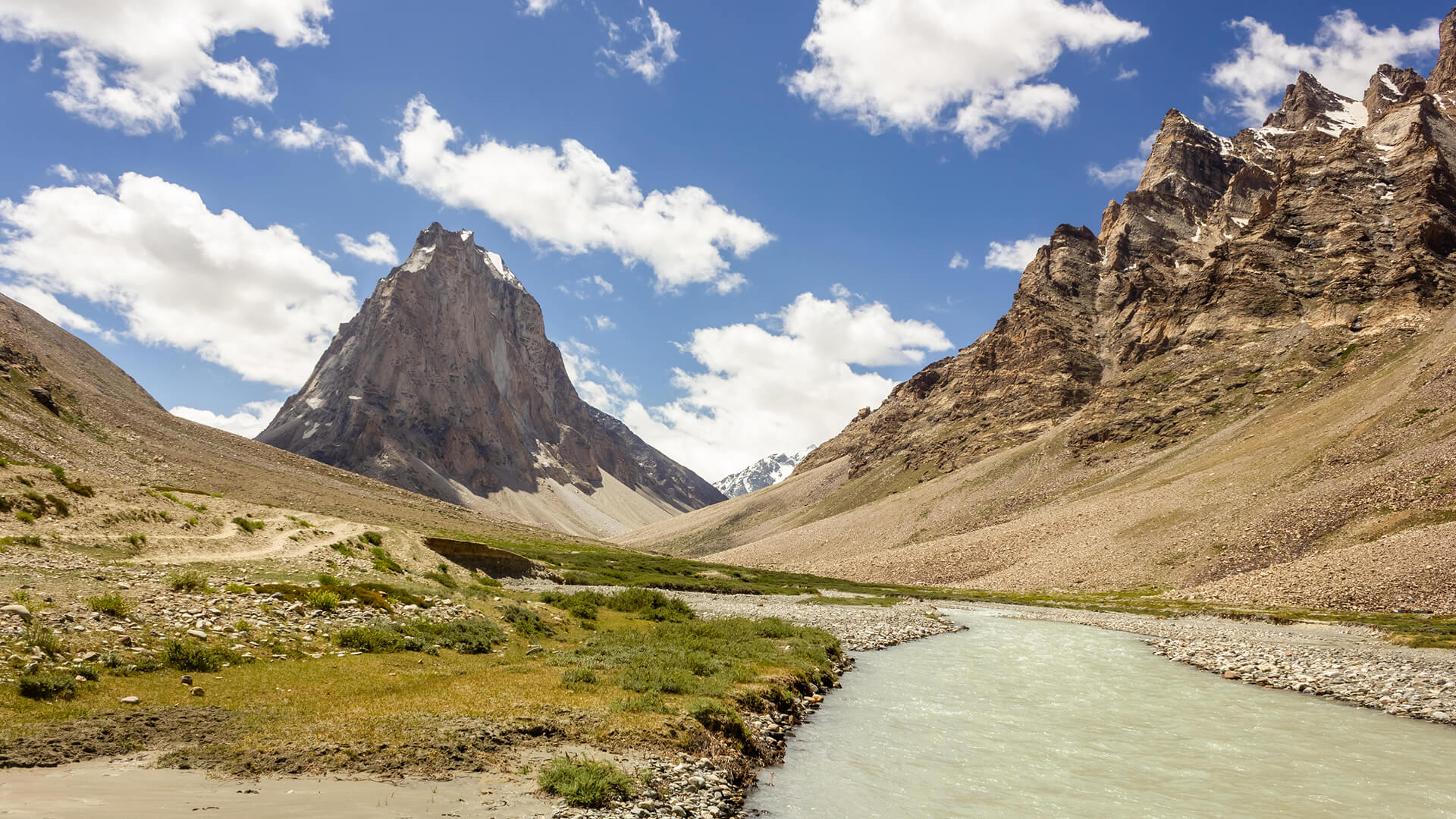
Padum to Darcha Trek: Complete High-Altitude Route Guide
The Padum to Darcha trek covers ~115–120 km in 8–9 days, crossing Shingo La (~5,060 m) between Zanskar and Lahaul.
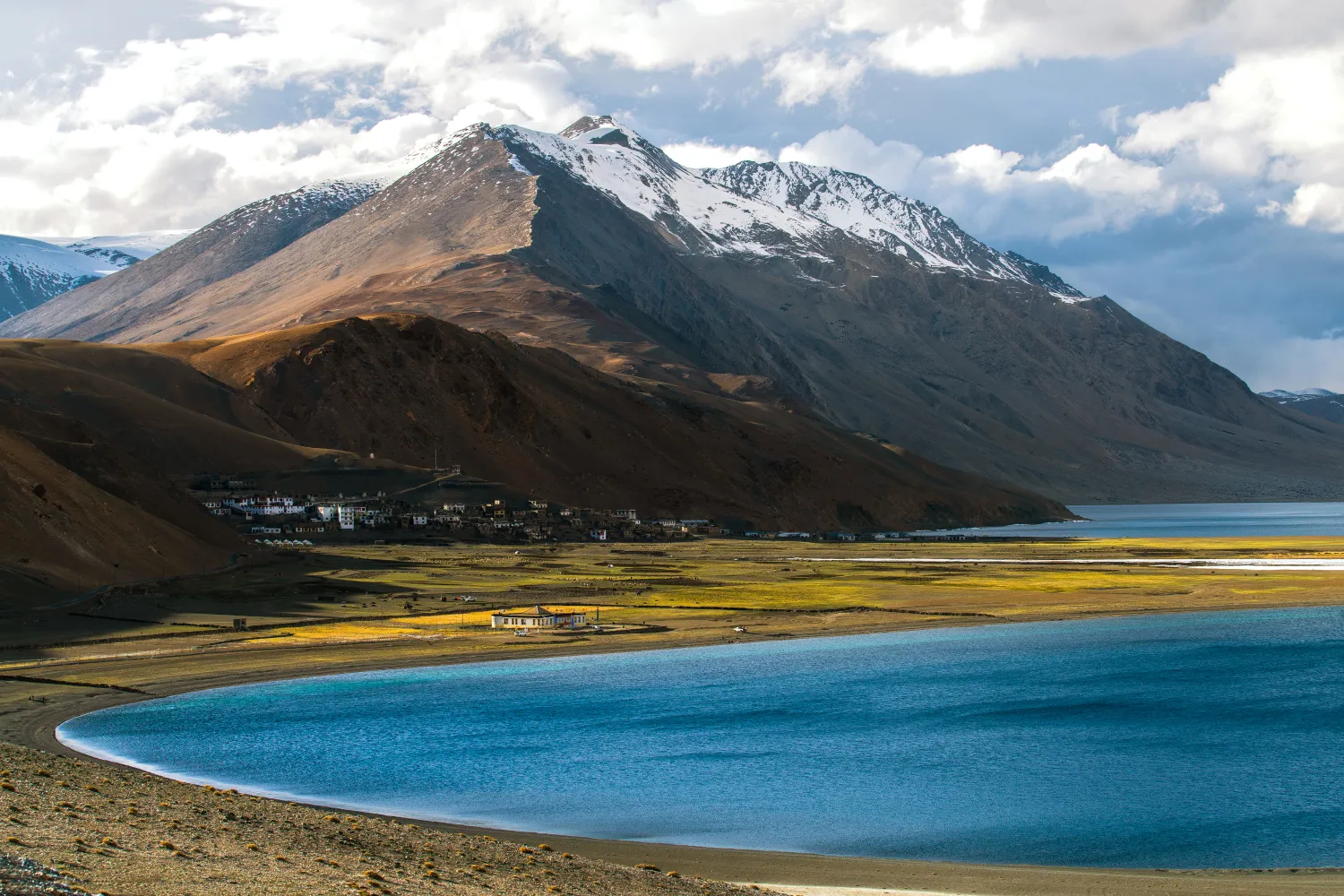
Rumtse to Tso Moriri Trek: Complete Ladakh Trail Guide
The Rumtse to Tso Moriri trek is an ~80 km, 7–8 day strenuous Ladakh trail crossing Kyamar La (~5,460 m) and Polokongka La (~5,190 m), ending at Tso Moriri Lake
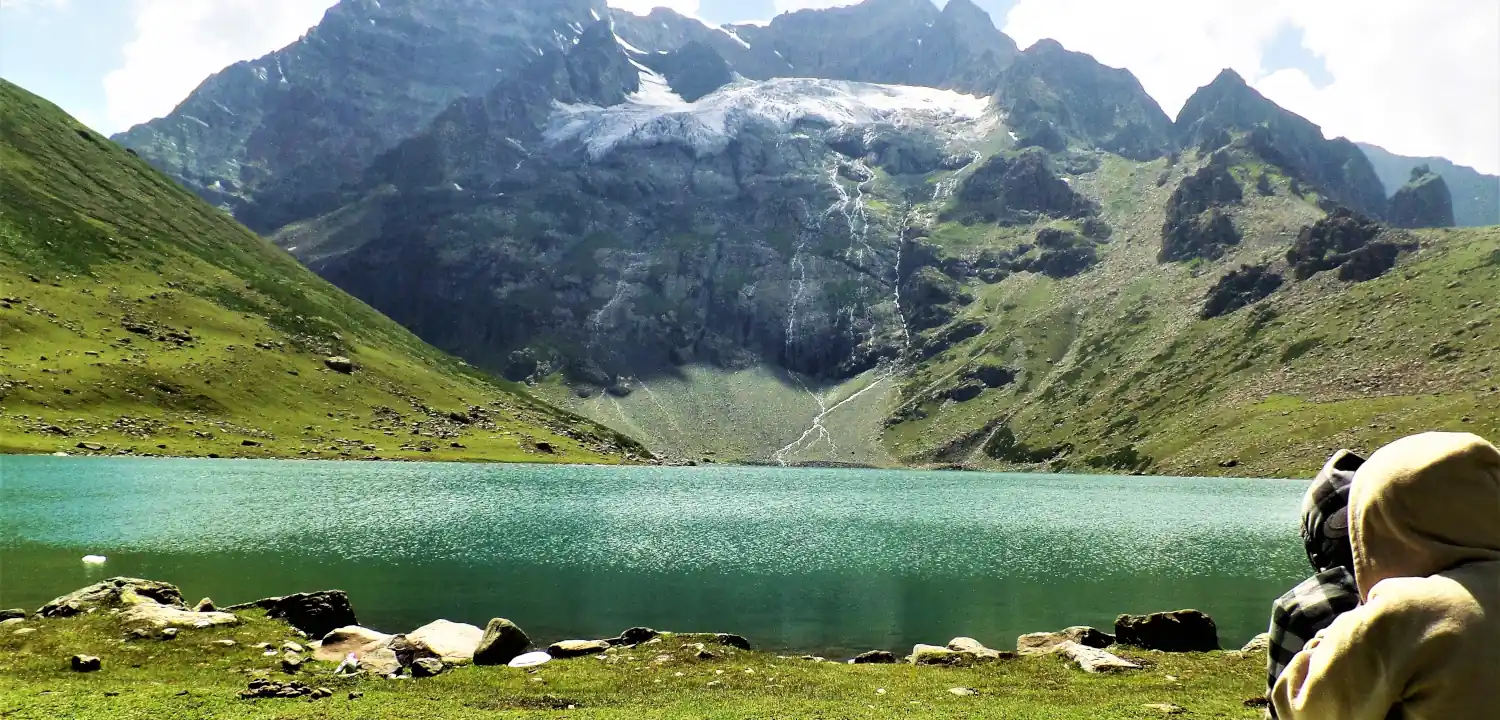
Naranag Gangabal Trek: Complete Guide (2026)
The Naranag Gangabal Trek is a 4–5 day moderate-difficult alpine trek in Kashmir, covering ~26–30 km from Naranag (2,150 m) to Gangabal Lake (3,570 m).
Common questions answered
The summit of Bali Pass sits at approximately 4,850 metres (15,912 ft) above sea level. Among the key camps, Har Ki Dun meadow is at 3,510 m, Kalkatiyadhar at around 3,680 m, and Bali Pass Base Camp at approximately 4,200 m. The altitude gain from Sankri (1,920 m) to the pass top is roughly 2,930 metres across 6 days of trekking.
Bali Pass Trek — Latest News
Rain Clouds Persist Across Himalayan Slopes | Cool and Wet Conditions Expected Through the Day | Trek Teams Progressing as Scheduled | Trek News
Rain clouds persist across Bali Pass Trek routes in Uttarakhand with cool, wet conditions expected. Trek teams progressing as scheduled despite challenging weat
Cloudy Conditions Across Several Trekking Slopes | Afternoon Showers Likely in Higher Reaches | Teams Continue to Progress Smoothly on Schedule | Trek News
Bali Pass Trek experiencing cloudy conditions and afternoon showers in higher reaches, but teams progressing smoothly on schedule. What trekkers need to know.
Bali Pass at 16,200 Feet: What the Mountains Taught Me About Fear, Faith and Friendship
Discover how the 16,200-feet Bali Pass Trek transforms trekkers through personal narratives of overcoming fear, building faith, and strengthening friendships in
Live Conditions
Real-time weather & trail status
Trail Conditions
Crowdsourced reports from trekkers who've done this route
Sign in to add a trip report
Find a Trek Buddy
Connect with trekkers planning the same route
No buddies yet for this trek
Sign in and be the first to post a planning signal.