
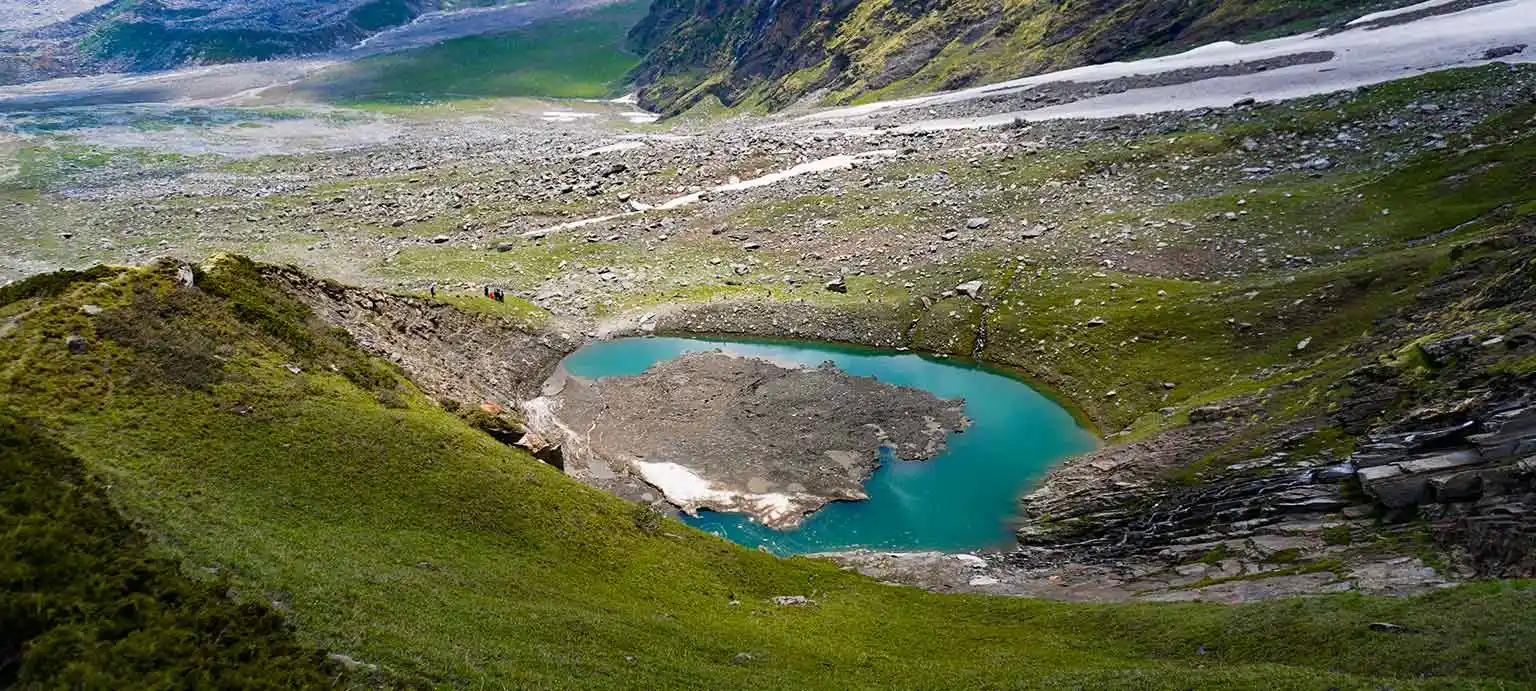
Why Beas Kund Trek is on every trekker's list
The Beas Kund trek is a 22 km round-trip Himalayan trail in Himachal Pradesh, climbing from Dhundi (2,830 m) to a glacial lake at 3,700 m in 3–4 days — rated Easy–Moderate and ideal for beginners.
Imagine standing at the edge of a turquoise glacial lake, surrounded by peaks that pierce the clouds, knowing that the water lapping at your boots will eventually flow thousands of kilometres through the Punjab plains as the mighty Beas River. That is the quiet magic of the Beas Kund trek — a journey to the very source of one of the Himalayas' most storied rivers.
Nestled in the Kullu–Manali region of Himachal Pradesh, the Beas Kund trail is a roughly 22 km round trip that climbs from the trailhead at Dhundi (2,830 m) to the glacial lake at 3,700 m, gaining around 870 m of elevation across 3 to 4 days. It is consistently rated among India's best beginner Himalayan treks — short daily distances, a well-marked trail, no technical sections, and a striking payoff make it ideal for first-timers stepping onto high-altitude terrain for the very first time in the 2026 trekking season.
Few beginner treks in India combine accessibility, mythology, and raw Himalayan scenery as seamlessly as Beas Kund.
Scenery and landmarks: The trail passes through fragrant pine and birch forests, sweeping alpine meadows (locally called thach), and a dramatic rocky moraine before opening onto the glacial lake. The views of Hanuman Tibba (5,982 m) — one of the most prominent peaks in the Kullu valley — and the Seven Sisters Peaks are particularly striking on the upper section of the route.
Accessibility from Manali: The trailhead at Dhundi is just 20 km from Manali town, a 30-minute drive. You can leave Manali after breakfast and be at your first campsite by afternoon. This makes last-minute planning feasible and keeps costs low.
Mythological significance: According to Hindu legend, the sage Rishi Vyas (also written Vyasa) — the revered author of the Mahabharata — meditated beside this glacial lake. The Beas River (Vipasha in Sanskrit) is said to take its name from him. Trekking to the source of such a historically significant river adds a layer of meaning that few alpine walks can offer.
Beginner-friendliness: Maximum altitude stays well under 4,000 m, reducing the risk of acute mountain sickness. Daily walking distances of 7–8 km are manageable for anyone with a basic level of fitness. The trail is used by organised groups throughout the season, so you are rarely truly alone.
For a broader introduction to trekking around Manali, see our Manali Trekking Guide. If you want to compare options, our Beginner Treks in Himachal Pradesh roundup is a useful starting point.
At a glance
Ask TrekSage about Beas Kund Trek
Get instant answers grounded in verified trek data — beginner-friendliness, best months, permits, packing, and more.
The route at a glance
Full route: Manali → Dhundi (drive) → Bakarthach → Beas Kund (and return)
| Segment | Distance | Elevation |
|---|---|---|
| Dhundi (trailhead) | — | 2,830 m |
| Bakarthach (camp) | ~7 km | ~3,300 m |
| Beas Kund (lake) | ~4 km from Bakarthach | ~3,700 m |
| Total round trip | ~22 km | Gain ~870 m |
The trail character shifts noticeably as you ascend. The lower section from Dhundi is forested and relatively gentle; the middle section opens into high meadows; and the final push to the lake crosses a rocky glacial moraine that demands careful footing.
Route map note: A physical route map is available from most Manali trekking operators and at the Dhundi forest checkpoint. The trail is cairn-marked on the upper moraine section.
Dhundi to Bakarthach
Distance: ~7 km | Elevation gain: ~470 m | Time: 4–5 hours
The trek begins at the Dhundi trailhead, where you will clear the forest checkpoint and pick up your permit. The path initially follows the left bank of the Beas River through a mixed forest of pine and silver birch — cool, well-shaded, and beautiful in the morning light. There are two or three stream crossings on this section; these are straightforward in September–October but can be calf-deep in early summer. After the tree line fades, the trail opens into the broad alpine meadows of Bakarthach at approximately 3,300 m. The campsite here is spacious, with clear mountain views on a good day and a reliable water source nearby.
Bakarthach to Beas Kund
Distance: ~4 km (one way) | Elevation gain: ~400 m | Time: 2.5–3.5 hours one way
This is the most visually dramatic segment of the trek. The trail climbs steeply over rocky glacial moraine — loose boulders and scree that require attention and trekking poles are strongly recommended here. As you gain height, the full panorama of Hanuman Tibba (5,982 m) comes into view, flanked by the cluster of summits known as the Seven Sisters Peaks. The final approach levels out suddenly, and the lake appears: a still, cold, impossibly blue-green pool fed by meltwater from the glacier above. Spend time here; the return to Bakarthach takes 2–2.5 hours.
The Beas Kund trek starts at Dhundi, 20 km from Manali town on the road toward Rohtang Pass.
From Delhi by road: Volvo/luxury buses run overnight from Delhi ISBT Kashmiri Gate to Manali (~14 hours, ₹900–₹1,800). Book via HRTC or private operators. Alternatively, hire a private taxi.
By air: The nearest airport is Bhuntar (Kullu-Manali Airport), approximately 50 km south of Manali. IndiGo and Air India operate seasonal flights from Delhi. From Bhuntar, taxis to Manali cost approximately ₹1,200–₹1,800. (⚠️ 2026 flight availability and fares — check airline websites.)
By train: The nearest broad-gauge railheads are Chandigarh and Ambala. From either station, take an overnight HRTC bus or hire a taxi to Manali (8–10 hours). See our How to Reach Manali guide for full details.
Manali to Dhundi (trailhead): Dhundi is a 30-minute drive from Manali. Shared jeeps and taxis depart from near the Old Manali bridge. A shared jeep costs approximately ₹100–₹150 per seat; a private taxi runs ₹500–₹700 one way. (⚠️ 2026 taxi fares — confirm locally.)
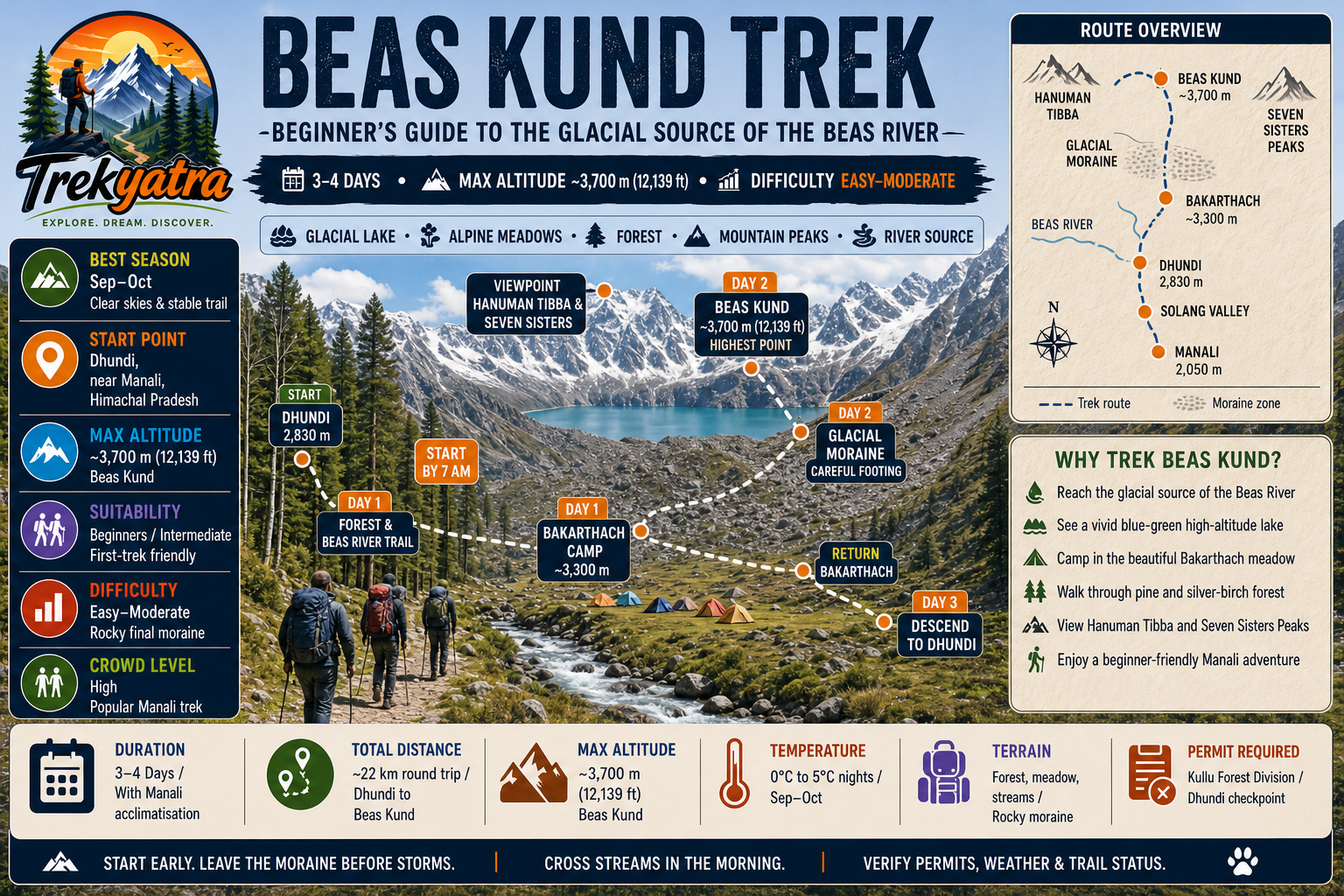
What each day actually looks like
Below is the recommended 3-night / 4-day itinerary including an acclimatisation day in Manali.
Day 1: Manali to Bakarthach
- Activity: Drive Manali → Dhundi, trek Dhundi → Bakarthach
- Drive: ~20 km, approximately 30 minutes
- Trek distance: ~7 km
- Walking time: 4–5 hours
- Start elevation: Dhundi, 2,830 m
- Camp elevation: Bakarthach, ~3,300 m
- Highlights: Forest trail, stream crossings, first views of Himalayan meadows
Leave Manali after an early breakfast. Taxis or shared jeeps to Dhundi depart from the Old Manali area. At the Dhundi checkpoint, complete permit formalities. The day's trek is a steady, enjoyable climb — not too taxing, perfect for settling into the mountains.
Day 2: Bakarthach to Beas Kund and Return
- Activity: Summit day to the glacial lake and return to Bakarthach
- Trek distance: ~8 km round trip
- Walking time: 5–6 hours total
- Max elevation: Beas Kund, ~3,700 m
- Camp: Return to Bakarthach
- Highlights: Moraine crossing, Hanuman Tibba panorama, glacial lake
Start early — ideally by 7:00 AM — to reach the lake before afternoon clouds build. The moraine section is steep and rocky; take it slowly and use poles. Allow at least 30–45 minutes at the lake before beginning the descent. Afternoon thunderstorms are possible June–September, so plan to be back at camp by early afternoon.
Day 3: Bakarthach to Manali
- Activity: Descend Bakarthach → Dhundi, drive to Manali
- Trek distance: ~7 km
- Walking time: 3–4 hours
- End elevation: Dhundi, 2,830 m; Manali, ~2,050 m
- Highlights: Leisurely forest descent, birdsong, end-of-trek satisfaction
Pack camp after breakfast and descend the way you came. The descent to Dhundi is noticeably faster than the ascent. Taxis back to Manali are easily arranged at Dhundi or can be pre-booked. The afternoon is yours to explore Manali's Old Town or simply rest.
Optional Day 0: If you are travelling from Delhi or another low-altitude city, consider arriving in Manali the evening before Day 1 and spending a rest day acclimatising. Walk around Old Manali, visit Hadimba Temple, and drink plenty of water. This reduces AMS risk significantly.
When to go
September–October (Recommended): This is the optimal window for the Beas Kund trek in 2026. The monsoon has cleared, skies are stable, views of Hanuman Tibba and the Seven Sisters are razor-sharp, and the trail is dry and firm. Overnight temperatures at Bakarthach drop to around 0°C to 5°C — cold but manageable with a good sleeping bag. Days are crisp and sunny.
May–June (Second Choice): The trail opens in late May as snow melts. Expect significant snow patches on the upper moraine and near the lake, which adds visual drama but demands careful footing. Nights are colder (down to -5°C at camp). Skies are generally clear before the monsoon arrives, but cloud cover increases in June.
July–August (Avoid): The southwest monsoon brings heavy rainfall to the Kullu valley. The trail becomes slippery and leech-infested in the forest section. More critically, flash flood risk in stream crossings and on the moraine is significant. Most experienced operators suspend departures during this period.
November onwards (Closed): Heavy snowfall renders the trail impassable from November. The Dhundi checkpoint typically closes for the season around late October or early November, depending on snowfall. (Exact 2026 closure date — Verify with Kullu Forest Division closer to season end.)
Is this trek right for you?
Difficulty rating: Easy–Moderate
The Beas Kund trek is widely considered one of the most accessible high-altitude treks in Himachal Pradesh. Maximum elevation stays at 3,700 m, which is comfortably below the threshold where acute mountain sickness (AMS) becomes a significant concern for acclimatised trekkers. Daily distances of 7–8 km are short, and there are no technical climbing sections.
Recommended fitness preparation (4 weeks before trek):
- 30-minute brisk walks or jogs, 5 days per week
- Stair climbing with a light pack (10–12 kg)
- Swimming or cycling for cardiovascular base
Important caveats:
- The rocky moraine on Day 2 requires sure footing and balance — trekking poles are strongly advised
- The trek is not recommended for individuals with severe cardiac or respiratory conditions without prior medical clearance
- Children above 10 years with reasonable fitness have completed this trek; consult a doctor for younger children
For more on altitude sickness prevention, read our Altitude Sickness Prevention Guide.
What permits you need
A Forest/Wildlife Entry Permit issued by the Kullu Forest Division is mandatory for all trekkers on the Beas Kund trail. This is obtained at the checkpoint at the Dhundi gate before you begin trekking.
- Permit name: Wildlife/Forest Entry Permit, Kullu Forest Division
- Cost: Approximately ₹50–₹150 per person per day (⚠️ 2026 rates to be verified with HP Forest Department or HPTDC before departure)
- Where to obtain: Dhundi checkpoint (in person, usually open from 7:00 AM); an online application option may be available via the Himachal Pradesh government tourism portal — check hptdc.hp.gov.in for current 2026 procedures
- Documents required: Government-issued photo ID (Aadhaar, passport, or voter ID) for all trekkers
- Foreign nationals: Overseas visitors should carry their passport and Indian visa. As of recent seasons, no Inner Line Permit (ILP) has been required for Beas Kund specifically, but FRRO registration requirements should be verified at your point of entry into India.
Keep a printed or digital copy of your permit accessible throughout the trek.
What this trek will cost you
DIY Trek (Per Person)
| Item | Estimated Cost (INR) |
|---|---|
| Forest/Wildlife Entry Permit | ₹50–₹150/day |
| Manali–Dhundi taxi (shared) | ₹500–₹700 |
| Campsite fee (Bakarthach, 2 nights) | ₹200–₹400/night |
| Meals on trail (6–8 meals) | ₹150–₹250/meal |
| Porter (optional, 3 days) | ₹800–₹1,200/day |
| Guide (optional, 3 days) | ₹1,000–₹1,500/day |
| DIY total estimate | ₹3,000–₹6,000 pp |
(All figures are estimates for the 2026 season. ⚠️ Camp fees and porter/guide day rates fluctuate; confirm locally in Manali before departure.)
Guided Package from Manali Operators
All-inclusive guided packages (transport, permits, camping, meals, guide, basic first aid) typically range from ₹4,500 to ₹8,000 per person for the 3-day trek from Dhundi. Prices vary with group size — solo bookings attract a premium.
Reputable local operators to enquire with (⚠️ verify current availability and reviews for 2026 season):
- Himalayan Adventure Treks, Manali
- Snow Leopard Adventures, Manali
- Himalayan Trekkers, Old Manali
For budget accommodation in Manali before and after the trek, hostels run ₹500–₹800/night and mid-range hotels ₹1,500–₹3,000/night.
What to pack
Clothing and Footwear
- Base layer: Moisture-wicking thermal top and bottoms
- Mid-layer: Fleece jacket or down jacket (essential at Bakarthach camp)
- Outer layer: Waterproof, windproof rain jacket
- Trek pants: Quick-dry, non-cotton
- Warm hat and gloves: Even in September, nights are cold
- Gaiters: Useful for snow patches in May–June
- Sun hat or cap: UV exposure is intense above 3,000 m
- Ankle-support trekking shoes: Waterproof with a grippy sole — see our Best Trekking Shoes in India guide
- Camp slippers: Lightweight for evenings at camp
- Wool or synthetic socks: 3–4 pairs; avoid cotton
Gear and Equipment
- Trekking poles: Strongly recommended, especially for moraine descent
- Sleeping bag: Rated to -5°C minimum for Bakarthach camp
- Daypack: 30–40 litres — see our Trekking Backpack Guide
- Headlamp with spare batteries
- Water bottles or hydration bladder: 2 litres minimum capacity
- Water purification: Iodine tablets or a filter straw
- Trekking tent: If camping independently (not required if on a guided package)
- Sunglasses: UV400 or polarised
- Dry bags or zip-lock bags: To protect electronics and documents
Health, Safety, and Documents
- Personal first aid kit: Bandages, antiseptic, blister plasters, pain relief (paracetamol/ibuprofen)
- ORS sachets: For hydration management
- Diamox (acetazolamide): Only if prescribed by your doctor for AMS prevention
- Sunscreen SPF 50+ and lip balm
- Insect repellent: Especially for the forested lower section
- Personal medications (sufficient supply plus extra)
- Government-issued photo ID (original)
- Printed permit copy
- Emergency contacts list: Guide's number, Zonal Hospital Manali, local rescue
- Travel insurance documents: Ensure policy covers high-altitude trekking
Stay updated on treks
Get seasonal trek recommendations, permit updates, and gear guides straight to your inbox.
Staying safe on the mountain
Altitude awareness: Although Beas Kund's maximum elevation of 3,700 m carries a low AMS risk for most people, symptoms can still occur — especially if you ascend too quickly. Watch for persistent headache, nausea, loss of appetite, and disturbed sleep. The golden rule: if symptoms worsen, descend immediately. Do not sleep at a higher altitude if you feel unwell. Read our detailed Altitude Sickness Prevention Guide.
Hydration: Drink 3–4 litres of water per day on trek. Dehydration accelerates AMS symptoms and fatigue. Avoid alcohol on trek days.
Weather windows: Afternoon thunderstorms are common between June and September. Start each day's walk by 7:00 AM to complete exposed sections before 1:00 PM. If you hear thunder on the moraine, descend immediately — there is no shelter above Bakarthach.
Stream crossings: Cross streams in the morning when glacial melt is at its lowest. Use trekking poles for balance, face upstream, and unbuckle your pack hip belt so you can shed your pack quickly if you slip.
Solo trekking: The trail is well-used and cairn-marked, but trekking alone in the Himalayas always carries added risk. We strongly recommend going with a group or hiring a local guide, particularly for first-timers. If you do go solo, leave your itinerary with your Manali accommodation and carry a fully charged phone (network is limited above Dhundi).
Emergency contacts:
- Zonal Hospital Manali: 01902-252379
- Manali Police: 100 / 01902-252240
- Pre-book your guide's mobile number and share it with family
- HRTC emergency assistance can be coordinated through your Manali hotel
Similar treks to explore
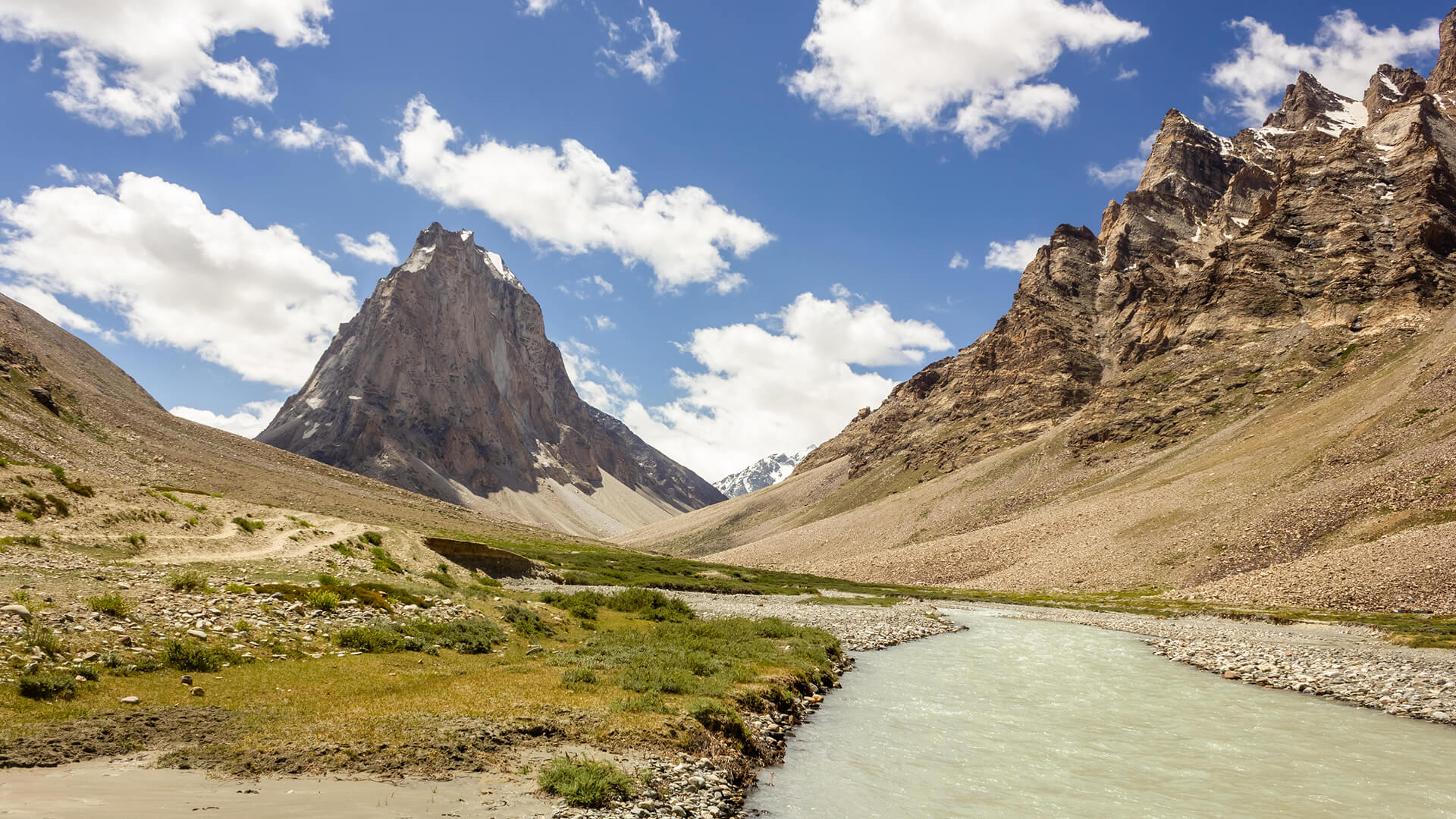
Padum to Darcha Trek: Complete High-Altitude Route Guide
The Padum to Darcha trek covers ~115–120 km in 8–9 days, crossing Shingo La (~5,060 m) between Zanskar and Lahaul.
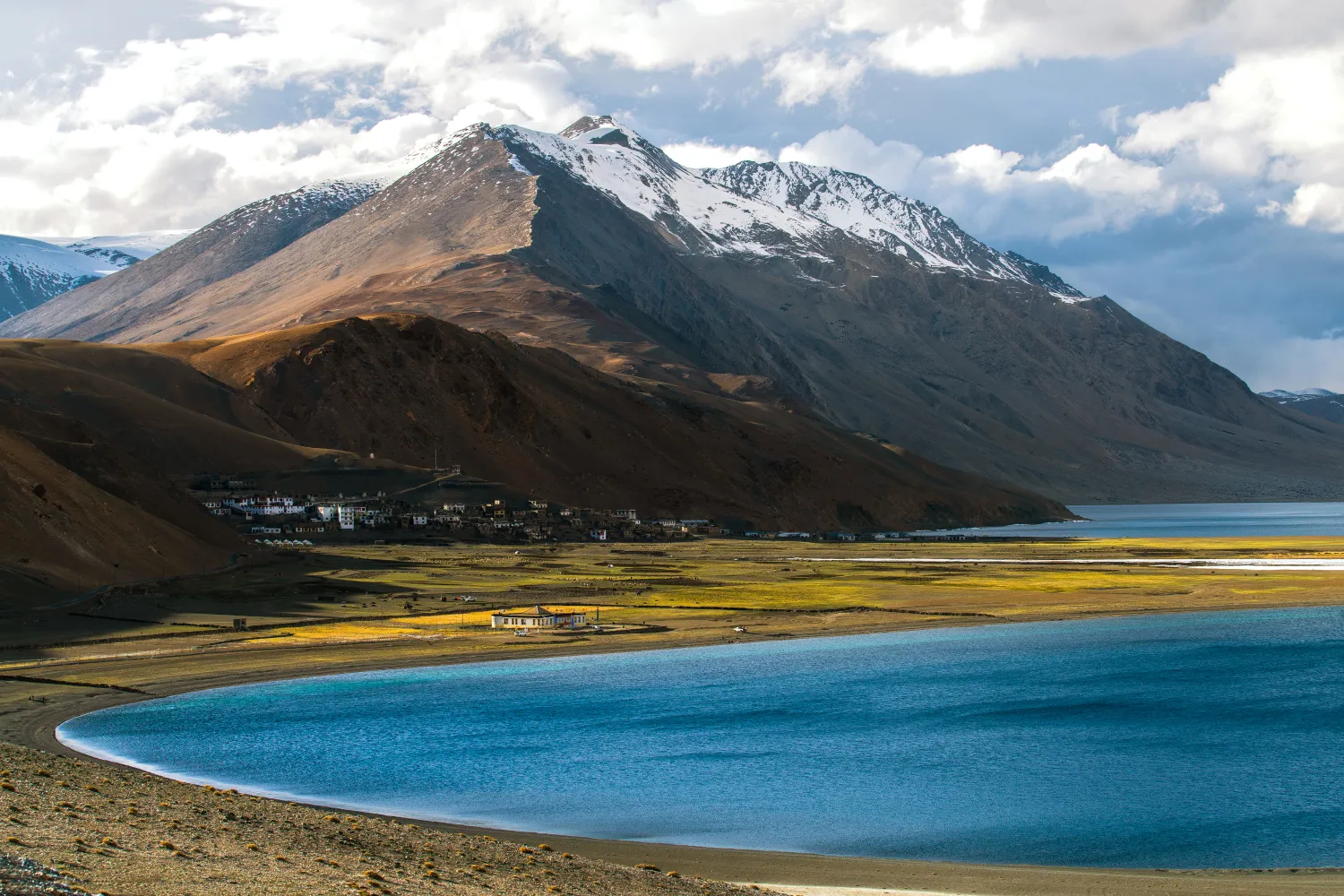
Rumtse to Tso Moriri Trek: Complete Ladakh Trail Guide
The Rumtse to Tso Moriri trek is an ~80 km, 7–8 day strenuous Ladakh trail crossing Kyamar La (~5,460 m) and Polokongka La (~5,190 m), ending at Tso Moriri Lake
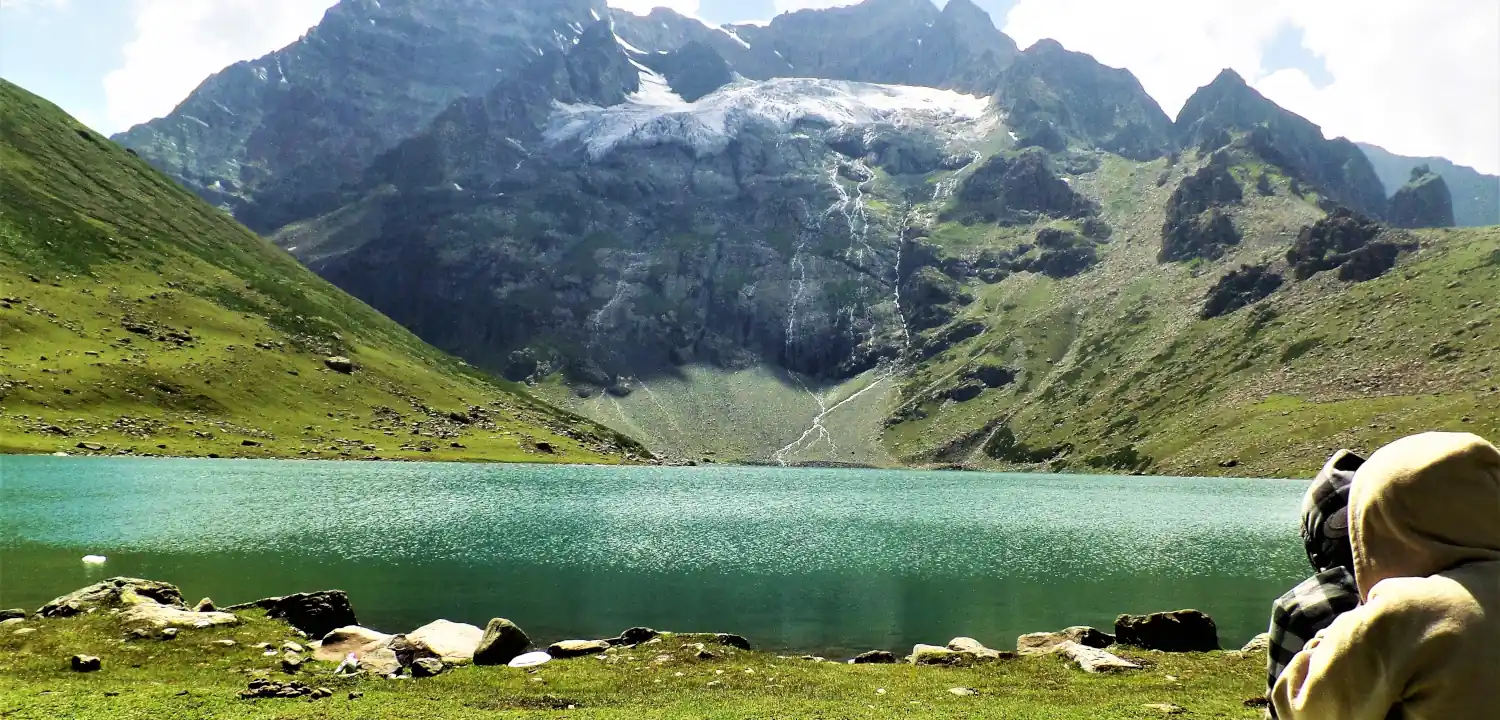
Naranag Gangabal Trek: Complete Guide (2026)
The Naranag Gangabal Trek is a 4–5 day moderate-difficult alpine trek in Kashmir, covering ~26–30 km from Naranag (2,150 m) to Gangabal Lake (3,570 m).
Common questions answered
Yes. The Beas Kund trek is rated Easy–Moderate and is one of the most popular first Himalayan treks in India. Maximum altitude is 3,700 m — well below the 4,000 m threshold where AMS risk rises sharply. Daily distances of 7–8 km are manageable, the trail is well-marked, and the total trip takes just 3–4 days. Anyone who can manage a 30-minute brisk walk should be able to complete this trek with proper preparation.
Live Conditions
Real-time weather & trail status
Trail Conditions
Crowdsourced reports from trekkers who've done this route
Sign in to add a trip report
Find a Trek Buddy
Connect with trekkers planning the same route
No buddies yet for this trek
Sign in and be the first to post a planning signal.